

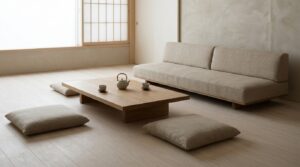
You walk into a room and something feels… steady, like the space isn’t trying to push you upward or outward, just holding you in place quietly. That feeling, that slight mental pause, a lot of it comes from how furniture sits in the room. And in Zen interior design, low furniture plays a bigger role than people realize, even if it looks simple at first glance.
It’s not just aesthetic, it’s physical, almost psychological. The way your body relates to the space changes when everything sits closer to the floor. You don’t notice immediately, but after a few minutes, it starts to feel different.
Zen furniture design draws from traditional Japanese minimalism and Buddhist principles of mindfulness. Its core lies in harmony with nature, emphasizing wood, stone, bamboo, cotton, and linen. Clean lines and uncluttered forms create an open flow that encourages mental stillness. The absence of excess allows the mind to breathe. When each object serves a purpose and occupies intentional space, the result is a feeling of effortless tranquility.
https://vinchyart.com/blogs/knowledge/what-are-the-best-zen-furniture-ideas-for-a-calm-space
Why Low Furniture Changes How A Room Feels
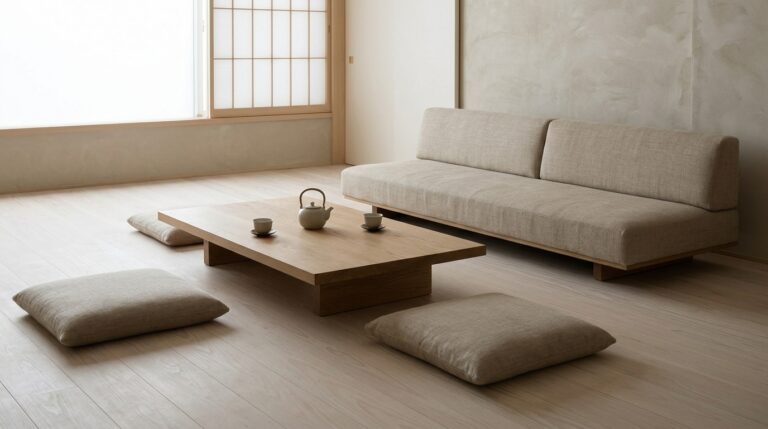
In Zen room design, furniture is intentionally kept low to create a connection with the ground. When your seating, tables, and even storage sit closer to the floor, your eye level shifts downward, and that changes your perception of the entire space. The room feels more stable, less scattered.
There’s also a subtle psychological effect happening. Studies in environmental psychology suggest that lower visual horizons can promote feelings of safety and calm, possibly because they reduce overstimulation. It’s not something you actively think about, but your body responds to it anyway.
Zen design takes influence from Zen Buddhism, first introduced to Asia as early as the 5th century. It includes principles of meditation, wisdom, and self-knowledge to help one achieve enlightenment and a better sense of self. Modern zen bedroom ideas seek to embody these principles for a meditative space where you can relax free of distractions.
https://www.allmodern.com/sca/inspiration/inspiration/9-zen-bedroom-ideas-that-inspire-rest-T9698
Groundedness Isn’t Just A Concept, It’s Physical
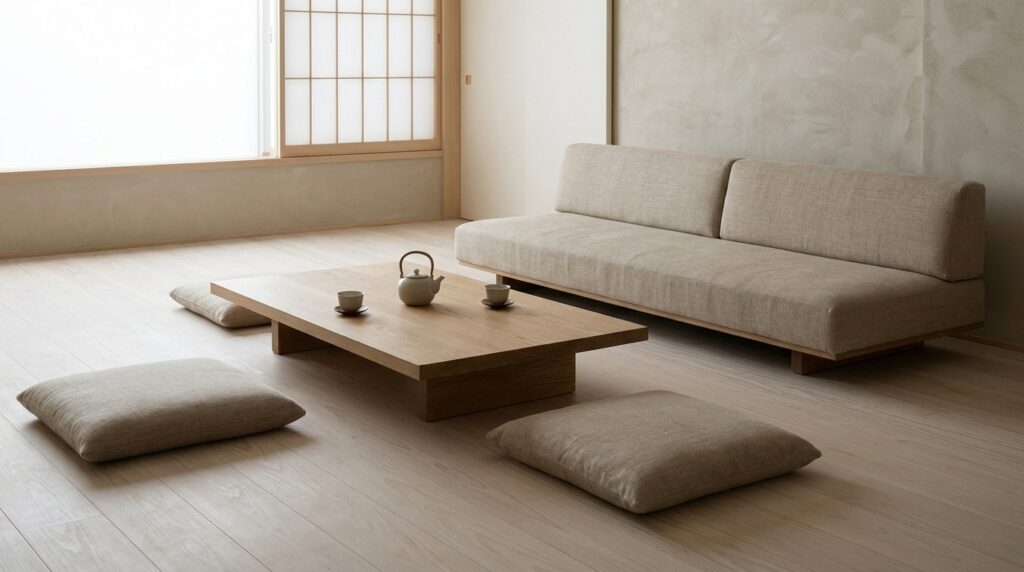
The idea of groundedness in interior design sounds abstract, but it’s actually quite physical. When you sit closer to the floor, your posture changes slightly, your movements slow down, and your awareness of the space becomes more immediate.
You’re not perched high above the room, you’re part of it. That difference can make a space feel more intimate and less performative. I remember sitting on a low sofa once, and it felt oddly calming, like the room wasn’t asking anything from me.
How Low Furniture Affects Visual Balance
High furniture tends to break the visual flow of a room, creating blocks that interrupt sightlines. Low furniture, on the other hand, keeps everything visually open. In minimal Zen interiors, this openness is key.
When your furniture stays low, walls appear taller, ceilings feel higher, and the room feels less crowded even if nothing else changes. That visual breathing space contributes a lot to the calm atmosphere people associate with Zen spaces.
The Role Of Floor Seating In Zen Spaces
Traditional Japanese interior design often includes floor seating like tatami mats, cushions, or low platforms. This isn’t just cultural preference, it directly supports the idea of grounded living.
Floor seating encourages slower movement and a more deliberate way of using space. You don’t just drop into a chair, you lower yourself down, and that small action changes your rhythm. It’s subtle, but it adds to the overall calm of the environment.
Materials That Enhance The Grounded Feeling
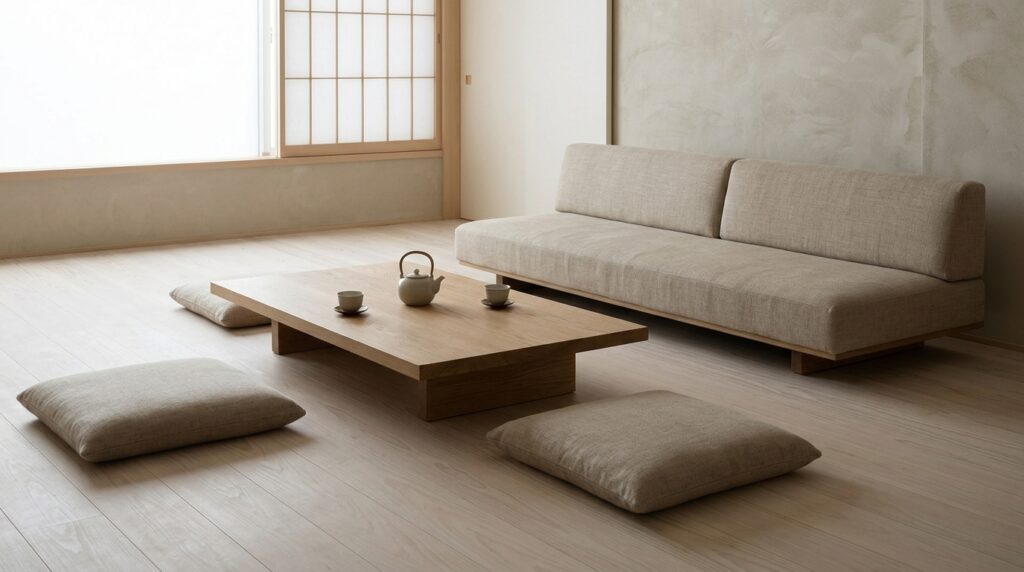
Low furniture alone isn’t enough, materials matter too. In Zen home decor, natural materials like wood, linen, and cotton are often used to reinforce that grounded feeling.
A low wooden table feels different from a glossy synthetic one. It adds warmth without drawing too much attention. The goal is to create a space that feels connected to natural elements, not overly manufactured or polished.
Why Empty Space Matters More With Low Furniture
When furniture is low, empty space becomes more noticeable. In Zen interior styling, that’s intentional. The space above the furniture isn’t meant to be filled completely.
This negative space creates a sense of openness and calm. Without it, even low furniture can start to feel cluttered. It’s not just about what you add to a room, but what you leave untouched.
Lighting Feels Softer In Low Setups
Lighting behaves differently in rooms with low furniture. Because the main visual focus sits closer to the ground, lighting can feel softer and more diffused.
In Zen lighting design, warm, indirect light works best. Harsh overhead lighting tends to break the calm atmosphere. When the light spreads gently across low surfaces, it enhances the grounded feel of the room.
Common Mistakes That Disrupt The Zen Effect
One common mistake is mixing low furniture with very tall, bulky pieces. This creates imbalance and disrupts the visual harmony. Another issue is overcrowding the room with too many items, even if they are low.
Ignoring proportions can also break the effect. If everything is low but packed tightly together, the room loses its sense of calm. Zen design relies on restraint, which is often harder than adding more.
How You Can Introduce Low Furniture Gradually
You don’t need to replace everything at once. Start with one piece, maybe a low coffee table or a lower seating option. Observe how it changes the room.
As you adjust, you might notice that you don’t need as much furniture as before. The room starts to feel more open naturally. Gradual changes tend to work better because they allow you to adapt to the new spatial feel.
Why This Approach Feels Different Without Trying Too Hard
Low furniture doesn’t demand attention. It doesn’t try to stand out or impress visually. Instead, it quietly changes how you experience the room.
You sit lower, move slower, and the space feels more stable without doing anything dramatic. That’s the subtle effect of Zen rooms using low furniture, it shifts your perception gently, without forcing anything, and somehow that’s what makes it work.