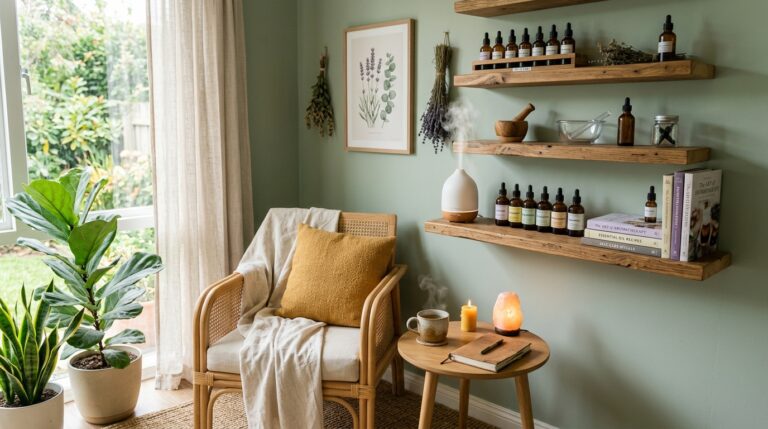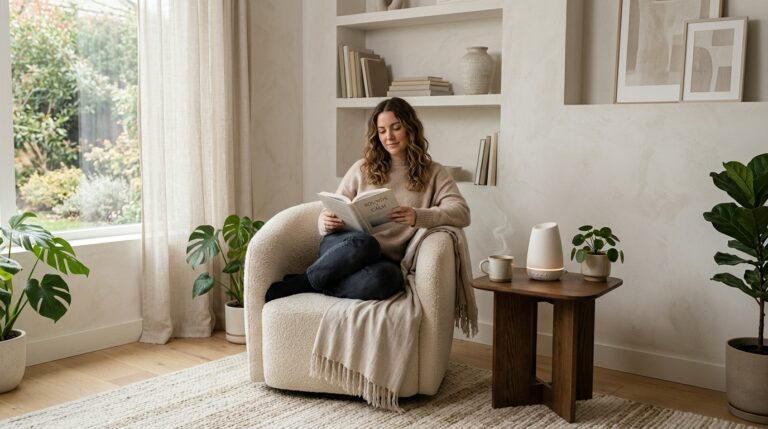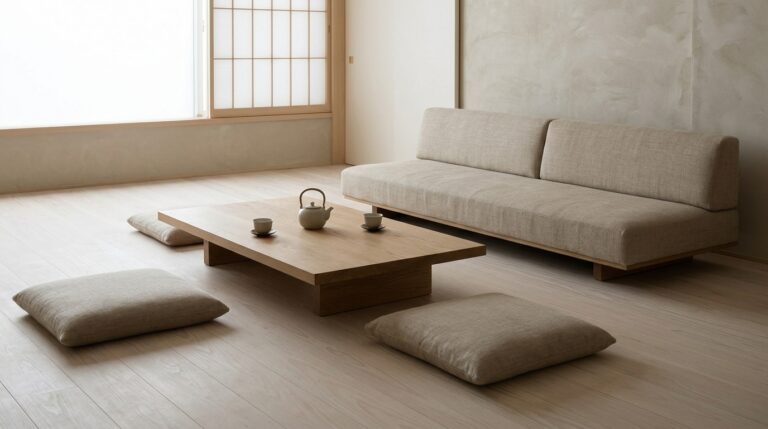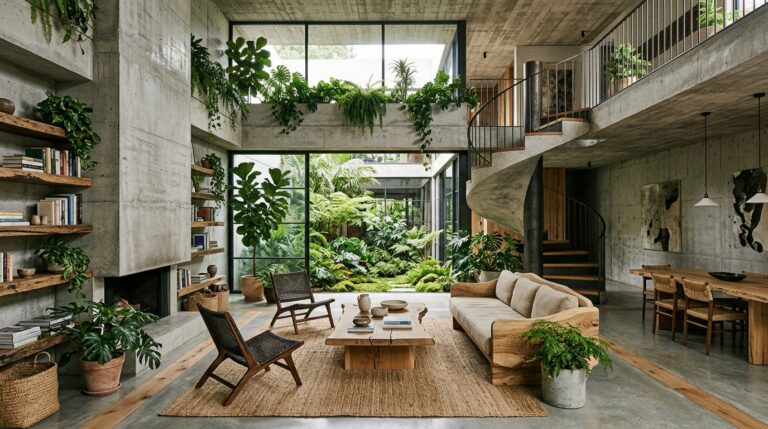
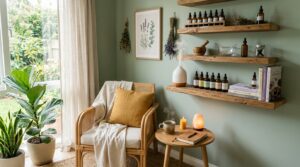
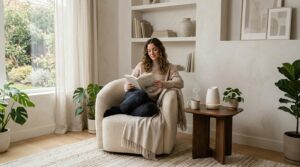
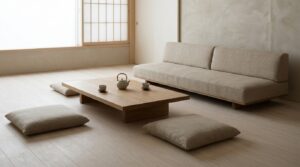
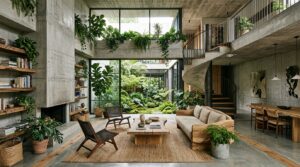
You sit in your living room and it looks… fine, maybe even nice, but something still feels slightly off, like the space is missing a layer you can’t quite name. That’s where biophilic interior design living room starts making sense, not as some fancy concept but as a quiet fix to something your brain has been noticing before you did.
It’s not about filling your room with plants randomly or turning it into a mini jungle, that usually backfires. It’s more about reconnecting the space with natural elements in a way that feels unforced, almost accidental, even though it isn’t.
What Biophilic Interior Design Actually Means In A Living Room
So biophilic design basically means integrating nature into built spaces, but that explanation feels too textbook honestly. In a living room, it’s more like making the space behave in a way your brain finds familiar, softer, less artificial.
There’s research showing exposure to natural elements indoors can reduce stress, improve mood, and even enhance focus levels. You don’t need exact numbers to feel it though, just compare how you feel in a concrete heavy room versus a space with natural textures and light, the difference is obvious once you notice it.
Biophilic design aims to turn every interior space into a true oasis. This practice is backed by plenty of research. This research indicates that while more time outside is always better, we can recreate many benefits of the outdoors by enhancing our exposure to natural elements.
https://www.rmcad.edu/blog/biophilic-design-integrating-nature-into-modern-interiors/
Why Your Living Room Feels Flat Without Natural Elements
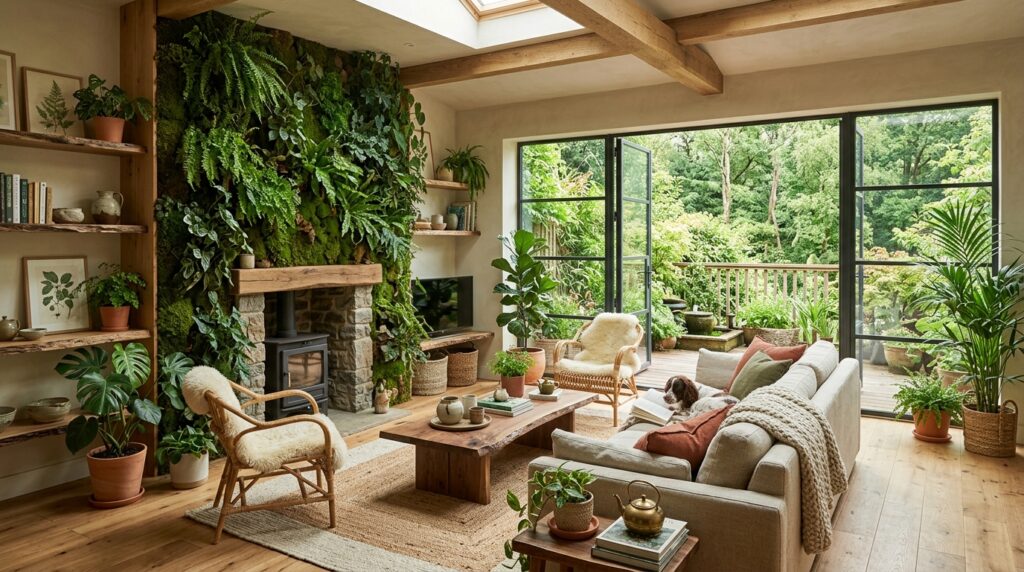
A lot of modern living rooms rely heavily on synthetic materials, smooth finishes, and controlled lighting. It looks clean, sure, but it can feel slightly lifeless, like everything is too still.
Your brain is used to variation, subtle movement, uneven textures, changing light, and when those are missing, the space feels incomplete in a quiet way. I once rearranged a room and added just one natural element, and suddenly it felt less rigid, which was strange because visually not much changed.
Biophilic design is not about just adding some plants or an extra window to achieve your desired effect. Instead it is a multi-faceted approach that really aims to stimulate an outdoor, natural experience indoors. This can be explained in the following five senses listed below.
https://plantiqueflorida.com/journey-through-5-senses-of-biophilic-design/
Natural Light Does More Work Than Any Decor
Before you add anything, look at your light. Natural light is one of the strongest elements in biophilic living room design.
If your windows are blocked by heavy curtains or furniture, you’re basically cutting off the easiest way to improve the space. Let light move through the room during the day, that shifting pattern alone adds life.
Even studies on indoor environments show natural daylight improves mood and productivity, which explains why rooms with good light feel more comfortable without extra effort.
Plants Help, But Placement Matters More Than Quantity
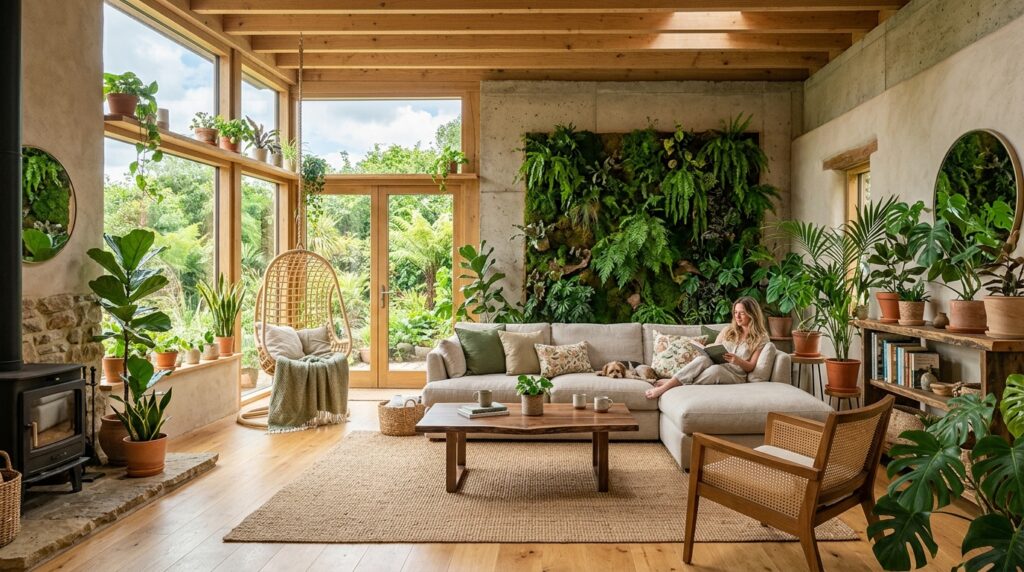
Plants are the obvious part of biophilic home decor, but more isn’t always better.
One or two well placed plants can change the whole feel of the room, while too many can make it feel cluttered or high maintenance. A medium sized plant near a window often works better than several small ones scattered randomly.
Indoor plant interest has grown a lot in recent years, especially in urban homes, but balance still matters. The goal isn’t to fill space, it’s to soften it.
Biophilic design can reduce stress, enhance creativity and clarity of thought, improve our well-being and expedite healing; as the world population continues to urbanize, these qualities are ever more important. Theorists, research scientists, and design practitioners have been working for decades to define aspects of nature that most impact our satisfaction with the built environment.
https://www.terrapinbrightgreen.com/reports/14-patterns/
Natural Materials Change How The Room Feels Instantly
Materials like wood, stone, linen, and wool bring in texture that synthetic materials usually lack. In a nature inspired living room, these elements make the space feel grounded.
A wooden coffee table with slight imperfections, a linen sofa cover, or a woven rug adds depth without adding visual clutter. Research in biophilic architecture suggests natural materials can reduce stress responses, which explains why these small changes feel noticeable.
Color Palette Should Feel Like It Came From Outside
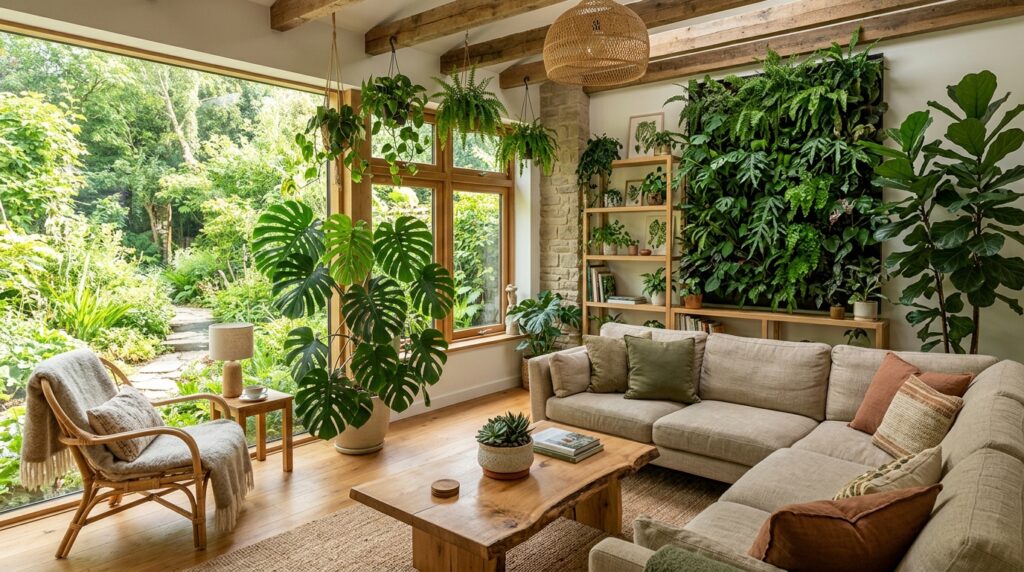
You don’t need bold greens or dramatic nature themes. The biophilic color palette tends to stay muted and grounded.
Soft browns, off whites, gentle greens, maybe a hint of blue, colors that exist in nature but in a toned down way. Too much color variation can feel chaotic, while too little can feel flat.
The key is subtle contrast, enough variation to keep the room alive without overwhelming it.
Airflow And Openness Are Part Of The Design Too
People often ignore this, but air movement matters.
A room that feels stuffy won’t feel connected to nature no matter how many plants you add. Slight airflow, whether from windows or fans, helps the space feel more dynamic.
In biophilic interior design, openness and air circulation contribute to comfort just as much as visual elements do.
Textures Add Life Without Adding Clutter
Flat surfaces everywhere can make a room feel static. Texture changes that.
Woven fabrics, soft throws, slightly rough finishes, these create subtle variation. In a biophilic living room, texture often does more than decorative objects.
You don’t need a lot of items, just a few well chosen ones that add tactile depth.
Views And Visual Connection To Outdoors Matter
If your living room has a view, even a small one, use it.
Position seating to face windows if possible, or at least not completely ignore them. That visual connection to outside space is a core part of biophilic design principles.
Even a small glimpse of greenery or sky can make a difference in how the room feels over time.
Common Mistakes That Make It Feel Forced
One common mistake is overdoing it, adding too many plants, too many natural elements, too many colors.
Another is trying to recreate a theme instead of letting the space evolve naturally. When it feels staged, it stops feeling calming.
Also, ignoring lighting and airflow while focusing only on decor can limit the effect significantly.
How You Start Without Changing Everything
You don’t need to redesign your whole living room.
Start with one change, maybe improve natural light, or add one plant, or introduce a wooden element. Then observe how the space feels.
Small adjustments over time tend to work better than large sudden changes.
Why This Style Feels Different Without Being Obvious
It’s not something people immediately point out when they walk in.
But you feel more relaxed sitting there, less restless, more comfortable without knowing exactly why.
That’s what biophilic interior design living room does, it doesn’t demand attention, it just quietly makes the space feel better in a way that builds over time.