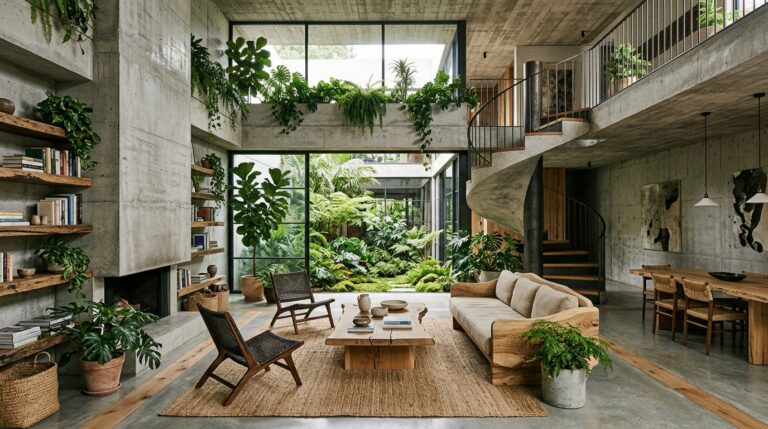

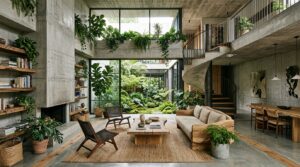
You walk into a space full of concrete and think… cold, heavy, maybe even a bit intimidating, but then there’s a plant in the corner, light hitting a rough wall, and suddenly it doesn’t feel harsh anymore. That’s where eco brutalism interior design sits, somewhere between raw structure and quiet life, not trying to soften everything, just enough so it doesn’t feel hostile.
It’s a strange mix honestly, brutalist interior design meets sustainable interior design, and instead of canceling each other out, they kind of balance in an unexpected way. You get weight and lightness in the same room, which sounds contradictory but somehow works.
Eco-Brutalism is an architectural style that reimagines the raw, minimalist aesthetics of brutalism through a sustainable and nature-conscious lens. Characterized by exposed concrete, geometric forms, and expansive open spaces, eco-brutalism integrates bold structures with the organic warmth of greenery and natural elements. Features like cascading vegetation, open-air courtyards, and water systems soften the starkness of concrete, fostering a seamless connection between built spaces and their natural surroundings. This style thrives in diverse climates, using climate-sensitive designs to balance functionality and environmental harmony.
https://www.roomandwild.com/blog/modern-architecture-eco-brutalism
What Eco Brutalism Interior Design Actually Means
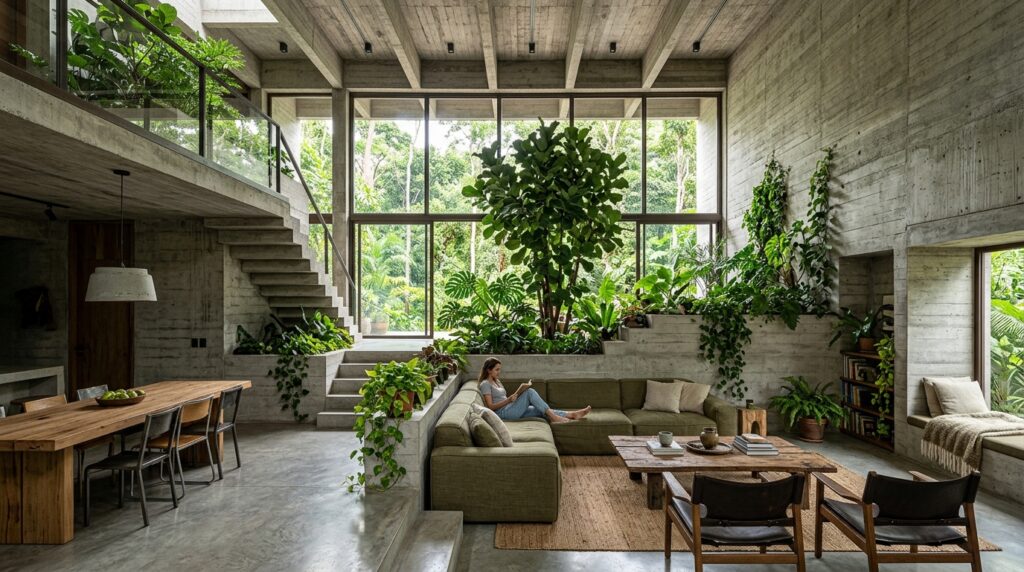
At its core, eco brutalism keeps the bold, exposed character of brutalism but introduces natural elements so the space doesn’t feel lifeless. You’re still working with concrete, steel, raw finishes, but you’re also bringing in wood, plants, and organic textures that soften the experience without hiding the structure.
The idea isn’t to cover roughness, it’s to coexist with it. There’s been a steady rise in interest for sustainable architecture trends and biophilic interior design, especially as people look for spaces that feel grounded but not overwhelming. Eco brutalism sits right in that overlap, slightly rough, slightly calm.
‘The style was characterised by its use of raw concrete, exposed structures, and geometric forms,’ says Graham. ‘In fact, Lasdun designed some of his walls to encourage the growth of lichen and moss, perhaps an early iteration of the concept of eco-brutalism.’
https://www.homesandgardens.com/gardens/what-is-eco-brutalism
Concrete Stays But It Behaves Differently
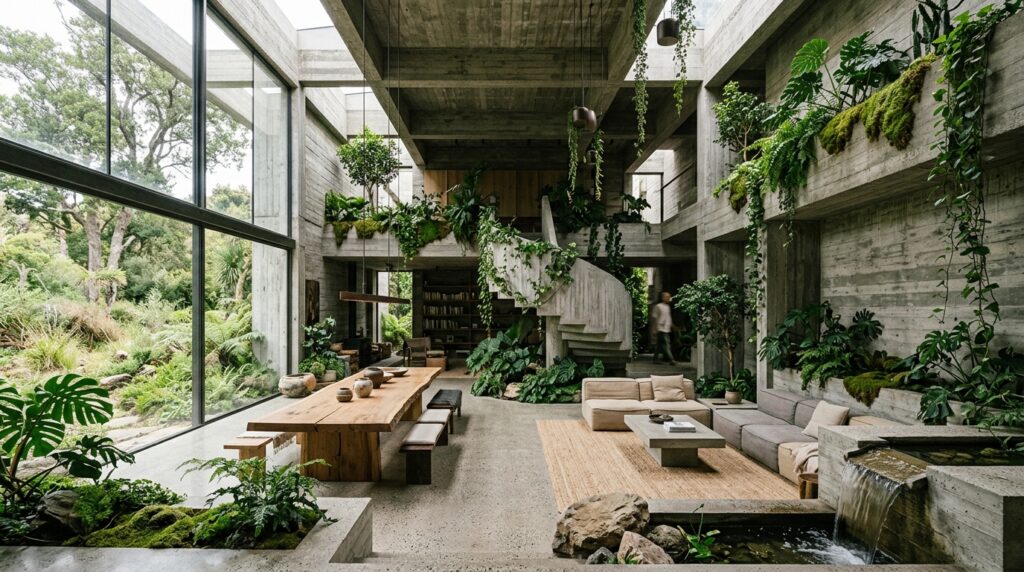
Concrete is still the main character here, but it’s not used aggressively. In eco brutalist interiors, concrete often appears in softer tones, matte finishes, or slightly weathered textures instead of sharp polished surfaces.
You might have an exposed wall or a concrete floor, but it’s balanced with warmth elsewhere. The goal isn’t to dominate the space with concrete, but to let it exist naturally without overwhelming everything else. That slight restraint makes a big difference.
Brutalism emerged in the mid-twentieth century as architecture stripped to its bones — concrete slabs, exposed steel, and a raw honesty that mirrored the urgency of a rebuilding world. More than a style, it became a social statement, housing libraries, theaters, schools, churches, and vast blocks of social housing that defined the civic landscape of the 1960s and ’70s. These structures, monumental in scale and unflinching in form, continue to provoke both reverence and debate, their austere silhouettes etched into the memory of modern cities.
https://the-ethos.co/what-is-eco-brutalism/
Natural Elements That Break The Rigidity
This is where the “eco” part really shows up. Plants, wood, and organic forms interrupt the rigid lines of brutalism in a subtle way. A single plant against a concrete wall can change the entire mood of a room.
In biophilic interior design, even small amounts of greenery have been shown to improve mood and reduce stress. You don’t need a full indoor garden, just a few well placed elements that introduce softness into the space.
Color Palette That Stays Muted But Not Lifeless
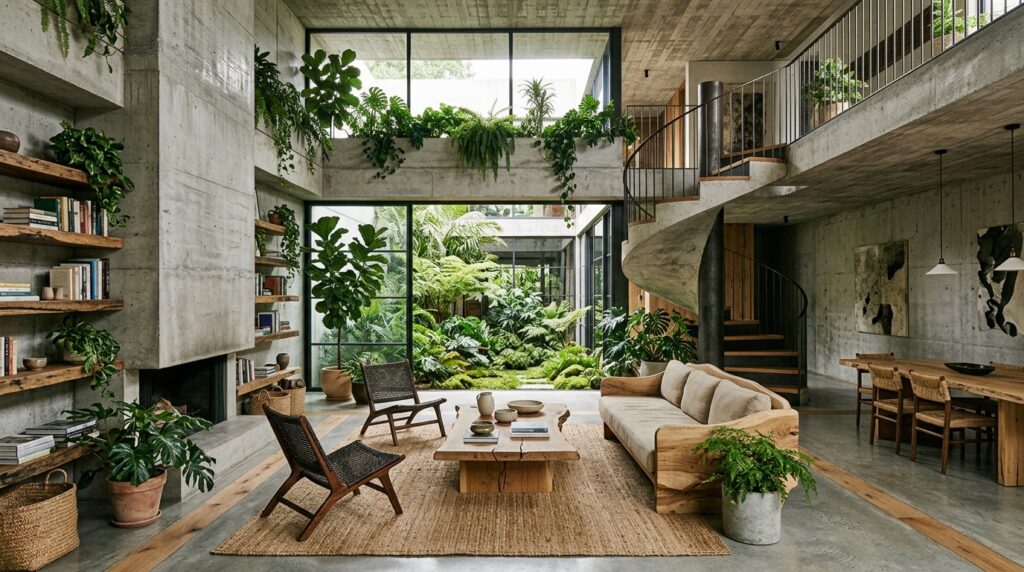
You won’t see bright colors dominating here. The eco brutalism color palette leans toward greys, earthy browns, off whites, and muted greens. It reflects both the raw materials and the natural elements without letting either overpower the other.
But the space shouldn’t feel flat. Variation in texture and tone becomes more important than color itself. Slight differences in shade or finish keep the room visually interesting without breaking the calm.
Furniture That Feels Solid But Not Heavy
Furniture in eco brutalist interior design often looks substantial, but it doesn’t feel oppressive. Clean lines, solid forms, but balanced with softer materials like fabric or wood.
A concrete table paired with a soft fabric chair creates contrast that keeps the room from feeling too rigid. The goal is to maintain structure while still allowing comfort, which is not always easy but works when done right.
Light Softens Everything Without Changing The Structure
Lighting plays a huge role in making eco brutalism feel livable. Natural light works best, highlighting textures and softening rough surfaces.
Artificial lighting should stay warm and indirect. Harsh lighting makes concrete feel colder than it already is. Soft light, on the other hand, adds depth and makes the space feel more human, even if the materials remain unchanged.
Imperfection Is Part Of The Aesthetic
Unlike polished interiors, eco brutalism allows imperfections to exist. Slight cracks, uneven textures, natural wear, these are not flaws here, they’re part of the design.
This approach aligns with sustainable thinking, where materials are not overprocessed or replaced unnecessarily. It creates a space that feels honest, even if it’s not perfectly refined.
Common Mistakes That Make It Feel Too Cold
One of the biggest mistakes is using too much concrete without balancing it. That quickly makes the space feel harsh and unwelcoming.
Ignoring natural elements is another issue. Without wood, plants, or softer textures, the “eco” part disappears completely. Also, using overly polished finishes can remove the raw character that makes brutalism interesting in the first place.
How To Start Without Overdoing It
You don’t need to redesign your entire home. Start with one element, maybe a concrete finish wall or a raw material piece of furniture.
Then add one natural element like wood or a plant. Adjust lighting to soften the space. Build slowly instead of trying to create the entire look at once.
Why Eco Brutalism Feels Surprisingly Balanced
At first glance, it looks heavy. But when done right, it feels grounded rather than overwhelming.
The contrast between raw structure and natural softness creates a kind of quiet balance. Your space feels stable, calm, and slightly unconventional at the same time.
That’s the strange appeal of eco brutalism interior design, it doesn’t try to hide its roughness, it just learns to live with it in a way that feels… unexpectedly comfortable.